
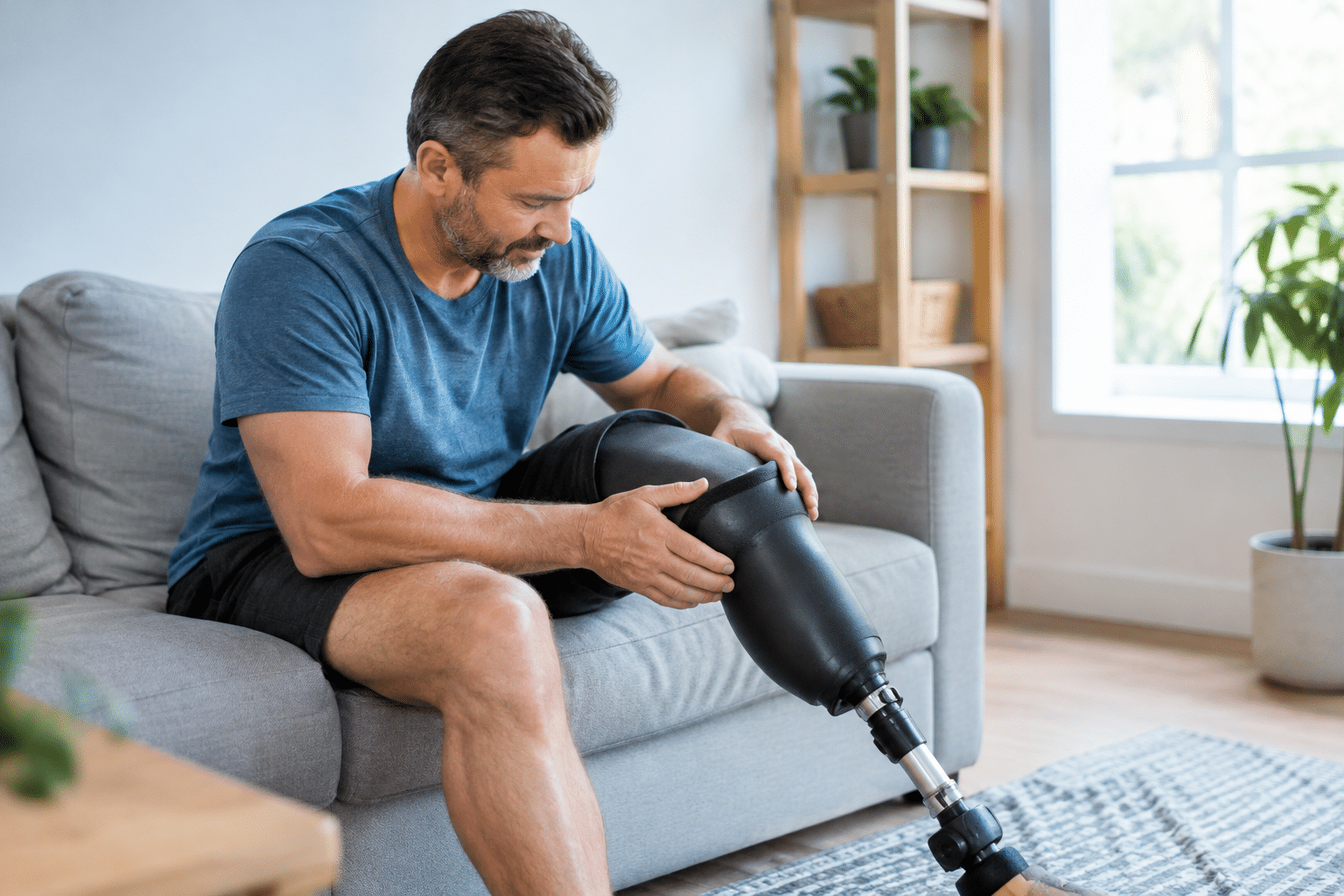
What Should You Do If Your Prosthesis Causes Skin Irritation?
October 14, 2026
A prosthesis is designed to help you move more comfortably and confidently, but even a well-fitted device can sometimes cause skin irritation. Redness, rubbing, pressure spots, blisters, or soreness may develop, particularly if your activity level changes or your prosthesis no longer fits the way it once did.
You shouldn't just learn to live with skin irritation. It can sometimes signal that your prosthesis needs an adjustment or that something in your routine needs to change.
Pay Attention to What Your Skin Is Telling You
First, pay attention to changes in your skin. A small area of redness may seem minor, but recurring irritation can become more serious if you don't address the source.
Common signs of irritation can include:
- Redness or discoloration
- Tender or sensitive areas
- Blisters
- Chafing or rubbing
- Pressure spots
- Swelling
- Broken or irritated skin
- Changes in skin temperature or appearance
Check your residual limb regularly, especially after wearing your prosthesis for an extended period or after increasing your activity.
If an area remains irritated after removing your prosthesis or gets worse, don't ignore it.
Don't Try to Push Through the Pain
It can be tempting to keep wearing your prosthesis because you don't want to interrupt your normal routine. However, continuing to put pressure on an irritated area may make the problem worse.
If your prosthesis is causing significant discomfort, consider taking it off and giving your skin an opportunity to recover. Depending on the severity of the irritation, you may need to reduce how long you wear the device until the problem is addressed.
Persistent pain isn't something you should have to accept as part of using a prosthesis.
Check the Fit of Your Prosthesis
One possible reason for skin irritation is a change in the way your prosthesis fits.
Your residual limb can change over time. Changes in activity, weight, swelling, muscle development, or other factors can affect how your limb fits in the socket. Even relatively small changes can create new pressure points or cause your limb to move differently inside the socket.
You may notice that your prosthesis feels:
- Tighter or looser than usual
- Less stable when walking
- More difficult to put on
- Different on one side compared with the other
- More uncomfortable after extended wear
If the fit has changed, adding padding or making your own modifications may not address the underlying problem. A prosthetist can evaluate the fit and determine whether an adjustment is appropriate.
Consider Your Prosthetic Socks and Liners
Your socks and liners can also affect comfort and fit. Prosthetic socks help manage volume changes and can affect how your residual limb fits inside the socket.
A sock that is too thin, too thick, wrinkled, or improperly positioned may contribute to pressure or friction. Likewise, check liners regularly for damage, wear, or anything that could affect comfort.
Before putting your prosthesis on, check that your socks and liner are clean, dry, and sitting the way they should. The thickness of your prosthetic sock can also affect how your device fits. If you notice changes in comfort or aren't sure what works best for you, your prosthetist can help you decide whether you need a different sock or liner.
Keep Your Skin Clean and Dry
Good skin care is an important part of prosthetic use.
Clean your residual limb according to your healthcare team's recommendations, and make sure your skin is thoroughly dry before putting on your prosthesis. Moisture can contribute to friction and may create an environment where skin problems are more likely to develop.
Clean the liner and any other part of the prosthesis that rests against your skin regularly. Follow the care instructions provided with your liner, and check with your prosthetist if you're unsure how best to clean or maintain it.
It's also a good idea to be careful about what you put on your skin before putting on your prosthesis. Lotions, creams, and other products can change how the liner sits against your skin or cause more rubbing. Unless your healthcare provider recommends a specific product, it's generally best to put the prosthesis on clean, dry skin.
Know When to Contact Your Prosthetist
Not every skin issue means you need a new prosthesis. Sometimes a relatively simple adjustment can improve comfort and reduce pressure in a problem area.
Contact your prosthetist if irritation:
- Keeps coming back
- Doesn't improve after removing the prosthesis
- Appears in a new location
- Develops after a change in your activity level
- Happens every time you wear the device
- Is accompanied by significant pain or difficulty walking
- Makes it difficult to use your prosthesis normally
Your prosthetist can evaluate your socket, alignment, suspension, socks, liner, and other components to help determine what may be contributing to the problem.
Don't Ignore Changes in Comfort
Your prosthesis should support your mobility, not regularly cause pain or skin problems. If something doesn't feel right, it's worth noticing.
At Atlantic Coast Prosthetics and Orthotics, we understand that every patient is different. Our team provides personalized prosthetic care, including evaluation, fitting, adjustments, and education to help patients use their devices as comfortably and effectively as possible.
With locations in Wilmington, Whiteville, and Shallotte, we are here to help when changes in fit, comfort, or skin condition make your prosthesis harder to use.
If your prosthesis causes recurring skin irritation, don't just push through it. Contact Atlantic Coast Prosthetics and Orthotics to discuss your concerns, and we’ll help determine whether your device needs an adjustment.